Derwent Water - Cumbria
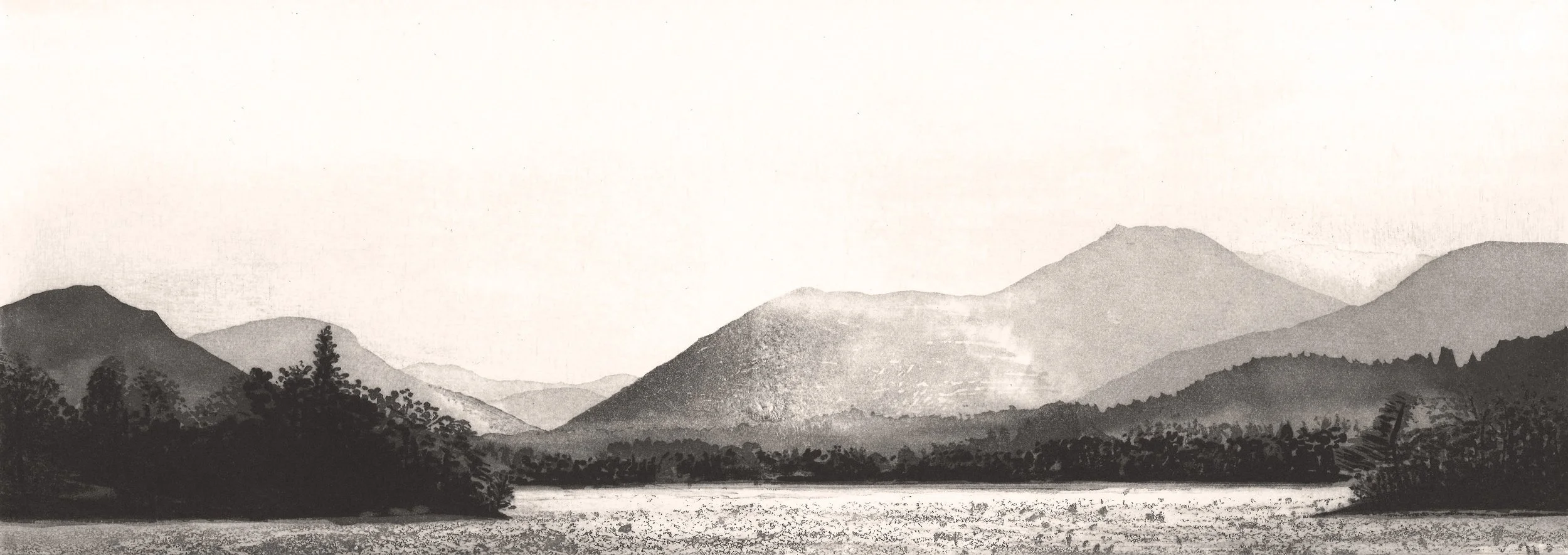
Derwent Water - Cumbria
etching aquatint, 40.5x14.7cm, edition of 30
Derwent Water is unique among the Cumbrian lakes for its breadth and the dramatic, ancient geology that surrounds it. Located in the heart of the Lake District National Park, it is three miles long and over a mile wide, yet surprisingly shallow, with an average depth of only 5.5 meters. This shallowness contributes to the lake's famous "looking-glass" quality, as the water can become remarkably still, creating perfect mirror images of the surrounding fells. To the south lie the "Jaws of Borrowdale," where the valley narrows into a rugged, dramatic gorge that has been a focal point for Romantic painters for centuries. To the west, the smooth, undulating ridge of Cat Bells provides a soft contrast to the dark, craggy silhouette of Skiddaw—one of England's oldest mountains—which guards the lake's northern shore. The lake is home to four permanent islands, each steeped in history. St. Herbert’s Islandwas the 7th-century home of a hermit priest who sought total isolation amidst the water. The presence of these wooded islands creates a sense of depth and mystery, a feature that famously inspired Beatrix Potter’s The Tale of Squirrel Nutkin. The light on Derwent Water is notoriously fleeting. Because of the surrounding high fells, the lake is subject to rapid shifts in atmosphere—moving from the soft, silvery mists of a Cumbrian morning to the deep, indigo shadows of the Borrowdale valley at dusk.